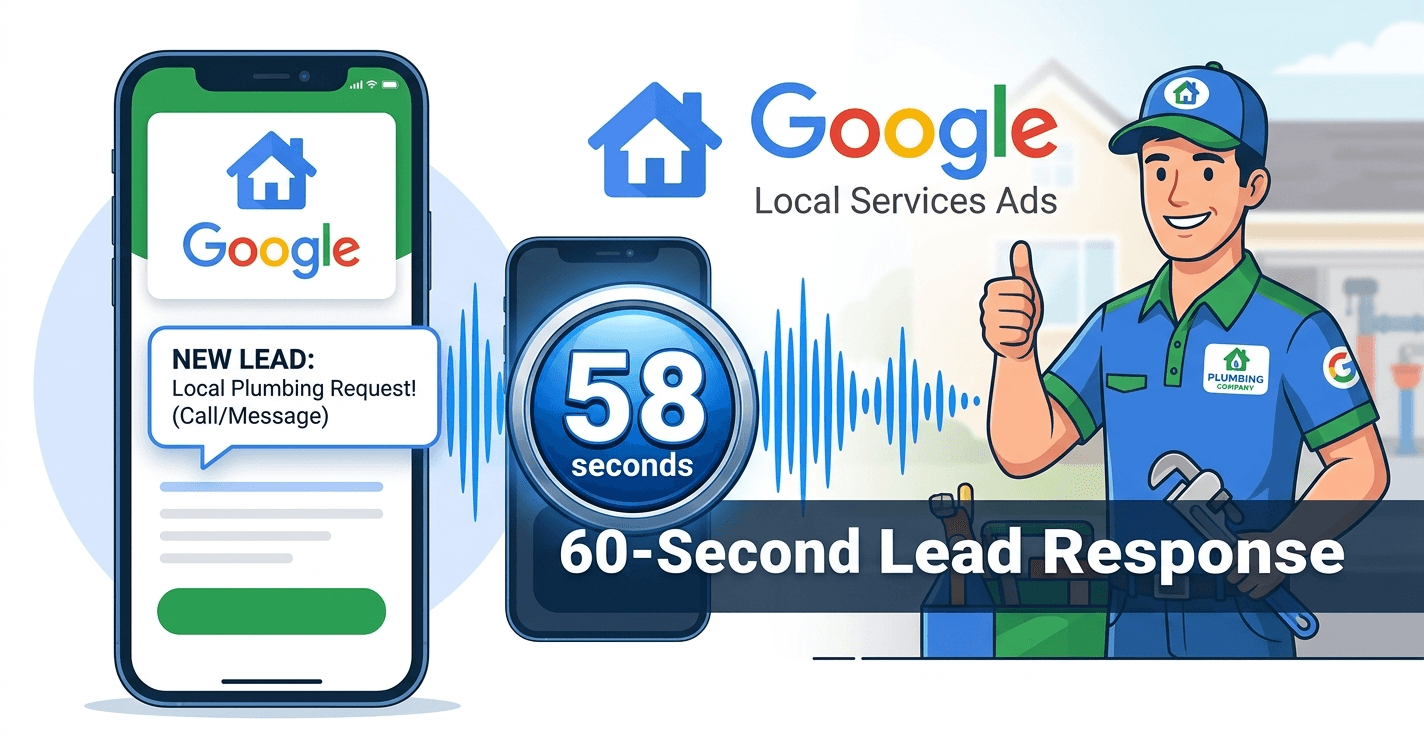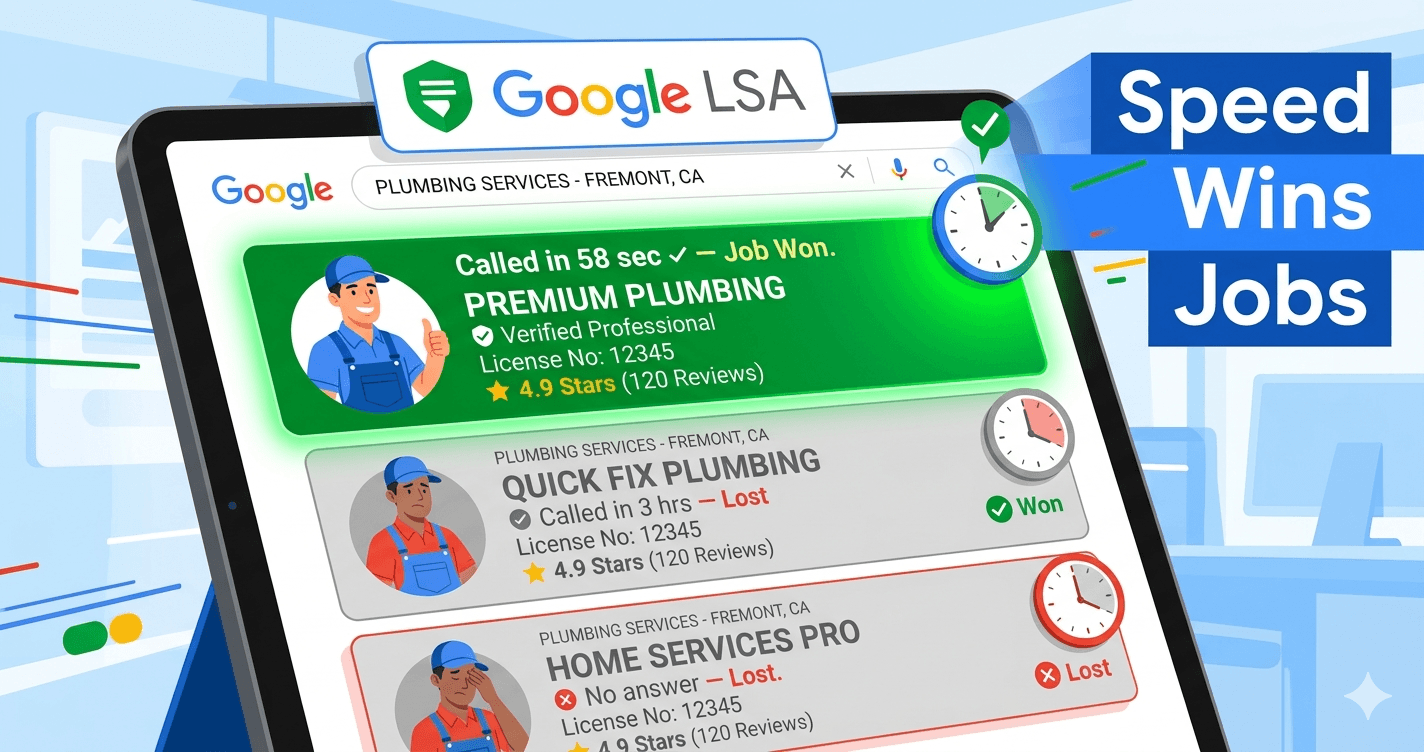
AI is transforming customer service for trade contractors by answering every call within 2 seconds, following up on new leads within 60 seconds, and collecting Google reviews automatically after job completion. Contractors using AI front-office tools report 2–3× improvement in lead conversion and 40+ new Google reviews per month on average.
TL;DR: AI is replacing the $3,500/month virtual receptionist stack for trade contractors with a fraction-of-the-cost AI layer that answers calls 24/7, books jobs automatically, collects reviews after every appointment, and never calls in sick.
For most of the trades industry's history, customer service meant one thing: pick up the phone, be polite, show up when you said you would, and do good work. That formula still holds. But the operational reality of running a trades business in 2026 has added a layer of complexity — customers expect immediate responses, 24/7 availability, digital confirmations, and proactive follow-up — while labor costs and staffing challenges make delivering all of that with humans increasingly difficult. AI is filling that gap.
The Problem With "Human-Only" Customer Service at Scale
A single CSR working 8 to 5, Monday through Friday, can handle a certain volume of calls with high quality. But that model breaks during peak season when call volume triples. It breaks after 5 PM when homeowners are calling from work. It breaks on weekends. And it breaks the moment that CSR calls in sick, takes vacation, or gives two weeks' notice.
The alternative — hiring multiple CSRs, running extended hours, maintaining an on-call rotation — is expensive, operationally complex, and still subject to human variability. A CSR who's had a hard morning handles the 9 AM call differently than the 11 AM call. Quality is inconsistent in ways that are difficult to catch and measure.
What AI Is Replacing — and What It Isn't
AI in the trades is not replacing technicians, project managers, or the relationships that drive referrals and repeat business. It is replacing the parts of customer service that benefit from consistency, availability, and scale rather than human judgment and relationship depth.
Specifically:
- First contact — answering the phone. AI answers every call, every time, in under two seconds. No hold music, no voicemail, no busy signal. The first impression is professional and immediate.
- Intake and booking. Collecting service address, problem description, scheduling preferences, and booking the appointment directly into your dispatch system — without a human needing to be involved.
- Post-job follow-up. Calling or texting customers 24 hours after service to confirm satisfaction and request a Google review. Doing this consistently across every completed job — not just the ones someone remembers to follow up on.
- Emergency triage. Detecting urgency in after-hours calls and immediately alerting your on-call tech with a summary SMS — so the tech has context before calling back.
The Compounding Effect of Consistent Follow-Up
One of the most underappreciated impacts of AI in the trades is what happens when post-job follow-up becomes consistent instead of occasional. A contractor who manually follows up on 30% of completed jobs — because someone remembers, has time, and doesn't feel awkward asking — accumulates reviews slowly and unevenly. A contractor whose AI follows up on 100% of completed jobs accumulates reviews at 3× to 4× the rate, with higher conversion because the ask happens at the optimal moment every time.
Over 12 months, this compounds significantly. A contractor with 20 new Google reviews per month reaches 240 reviews per year — a review count that dominates local search rankings and creates a level of social proof that dramatically reduces the friction of converting new callers into booked jobs.
What "AI-Powered" Actually Means for Your Customer Experience
For your customers, AI-powered customer service looks like this: they call your business at 9 PM because their AC stopped working. The phone is answered in two seconds. A professional voice asks how it can help. The AI collects their address, understands the urgency, and either books a first-available appointment for tomorrow morning or — if the situation is an emergency — alerts your on-call tech within seconds. The customer receives a confirmation text with the appointment details. The next morning, the tech shows up prepared. 24 hours after the job is done, the customer gets a follow-up call checking that everything is working. That interaction, across its full arc, represents a level of customer service that most small HVAC and plumbing businesses haven't been able to deliver consistently — until AI made it achievable at any scale.
See what this looks like for your business — try HulloDesk free →
How to get started
Follow these clear steps to implement this strategy in your business today.
Identify the repetitive customer interactions in your business
List the top 10 things your CSR or front office handles every day. Most of these — booking, confirmation, follow-up, FAQ — are exactly where AI adds value without reducing quality.
Map the customer journey from call to review
Draw out every touchpoint between a new customer calling and leaving a Google review. Identify which steps currently have gaps — missed calls, delayed callbacks, forgotten follow-ups. AI can close each of these.
Start with one AI application, not all of them
Begin with inbound call handling — the highest-impact, lowest-risk application. Once that's running well, add post-job review collection. Build incrementally rather than trying to automate everything at once.
Frequently Asked Questions
Q:Does using AI make a contracting business seem less personal?
Q:Will customers know they're talking to an AI?
Q:Which part of customer service is AI best at for contractors?
The AI Front Office Setup Checklist
Stop losing jobs to missed calls. Get the 4-step checklist we use to set up 24/7 AI receptionists for $1M+ trade businesses.
No spam · Instant PDF delivery · Unsubscribe anytime

Prajwal Kumar is the founder of HulloDesk and an expert in AI voice automation for the trades. He built HulloDesk after watching skilled contractors lose jobs to competitors who simply answered the phone faster. He writes about AI, lead conversion, and practical growth systems for HVAC, plumbing, electrical, and home service businesses.
View all insights by Prajwal