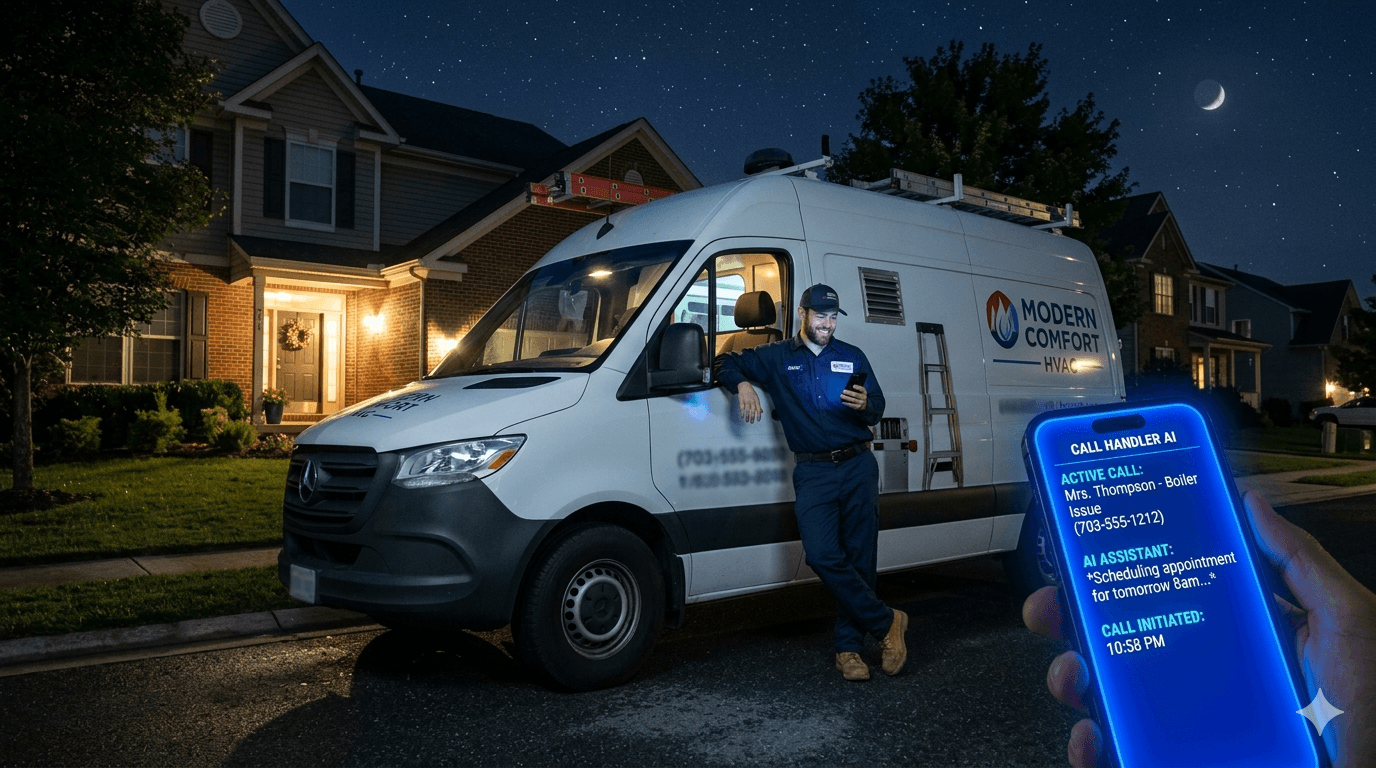
HVAC contractors capture after-hours calls by forwarding their business number to an AI receptionist that answers 24/7. The AI identifies emergencies — no AC at 95°F, refrigerant leak — alerts your on-call technician via SMS, and books the job. Customers never reach voicemail, even at 2 AM.
TL;DR: After-hours HVAC calls are worth 2× daytime calls — homeowners in emergencies book on urgency, not price. HulloDesk answers every after-hours call, dispatches true emergencies immediately, and books next-morning slots for the rest — without waking you up.
HVAC systems don't fail on a schedule. The compressor that gives out on a 96°F Tuesday afternoon doesn't wait for 9 AM Wednesday. The furnace that stops working when overnight temperatures drop to 28°F doesn't hold until Monday morning. When something breaks, the homeowner picks up the phone immediately — and the contractor who answers that call gets the job.
Why After-Hours Calls Are Your Best Leads
After-hours HVAC callers are not casual inquiries. They are not price-shopping or gathering estimates. They have a problem that is affecting their family's comfort or safety right now, and they are ready to book immediately. The conversion rate on a properly answered after-hours emergency call is dramatically higher than a routine daytime service inquiry.
These callers are also more likely to become long-term customers. An HVAC company that answered the phone at 11 PM when a family had no AC in summer heat and got a tech out the next morning creates a brand impression that no marketing budget can replicate. That customer tells their neighbors. They call you for their annual tune-up. They sign a maintenance agreement. The lifetime value of that after-hours lead, properly captured, can easily exceed $5,000.
What Happens to After-Hours Calls Without a System
Most HVAC businesses don't have a defined after-hours protocol. The options available to them are:
- Voicemail. As discussed, fewer than 20% of urgent callers leave a voicemail. The call is lost.
- The owner's personal cell. Sustainable for the first year. After that, it creates burnout, disrupts family time, and doesn't scale as the business grows.
- An employee rotating on-call. Expensive, creates resentment, and still depends on one person being available and awake.
- A live answering service. Takes a message. Customer still doesn't know they're booked. And the per-minute cost of 3 AM calls can be surprisingly steep.
What AI After-Hours Coverage Actually Looks Like
An AI answering service configured for after-hours HVAC coverage does the following on every after-hours call, automatically:
- Answers immediately, identifies itself as the AI assistant for your HVAC business, and asks how it can help.
- Collects the service address, describes the problem the customer is experiencing, and asks about urgency indicators (indoor temperature, vulnerable household members, length of outage).
- If the call meets your emergency criteria, it sends an immediate SMS to your on-call tech with the customer's name, address, and problem summary. The tech can call back within minutes with full context.
- If the call is not an emergency, it offers the next available appointment slot in your dispatch calendar and books it directly, sending the customer a confirmation SMS so they know they're on your schedule.
By 7 AM the next morning, your dispatch board shows every after-hours call — booked, triaged, and ready for the day's route. No callbacks to make. No leads to chase. No customers who went with a competitor overnight.
The Revenue Impact
A mid-sized HVAC company typically receives 30–50 after-hours calls per month during peak season. If the current system captures 10% of those (the ones who leave a voicemail and whose callback actually connects), that's 3–5 jobs. If an AI system captures 90% of those, that's 27–45 jobs. At an average service call value of $350, the difference is roughly $8,400 to $14,000 in monthly after-hours revenue — from calls that were already coming in but going unanswered.
How to get started
Follow these clear steps to implement this strategy in your business today.
Define your after-hours response tiers
Decide what gets same-night dispatch vs. first-morning appointment. Emergency criteria: no heat below 35°F, no AC above 90°F with vulnerable household, CO alarm. Everything else books for 7 or 8 AM next day.
Configure your on-call SMS alert
Set up the AI to send an immediate SMS to your on-call tech when an emergency tier call comes in. Include the caller's name, address, and problem summary so the tech can call back informed.
Review your overnight bookings each morning
Your dispatch board should show a populated queue of after-hours bookings every morning. If it's empty, check your call log — most HVAC businesses are surprised how many calls were coming in after hours before they started tracking.
Frequently Asked Questions
Q:What percentage of HVAC calls come in after business hours?
Q:Is it worth offering after-hours HVAC service?
Q:How does after-hours AI call handling work?
The AI Front Office Setup Checklist
Stop losing jobs to missed calls. Get the 4-step checklist we use to set up 24/7 AI receptionists for $1M+ trade businesses.
No spam · Instant PDF delivery · Unsubscribe anytime

Prajwal Kumar is the founder of HulloDesk and an expert in AI voice automation for the trades. He built HulloDesk after watching skilled contractors lose jobs to competitors who simply answered the phone faster. He writes about AI, lead conversion, and practical growth systems for HVAC, plumbing, electrical, and home service businesses.
View all insights by Prajwal